Curtis.Castiglione@ROzebra.com

2018 Ford F-250 Front-End Collision Repair Guide
Written by Curtis Castiglione
If you own a 2018 Ford F-250 Super Duty and have been involved in a front-corner collision, you might be surprised when the initial insurance estimate of a few thousand dollars suddenly doubles or triples once the truck reaches the repair facility. To a vehicle owner, the damage may look like a simple dented bumper or a scraped fender. However, heavy-duty trucks are engineered differently than passenger cars, and the way they handle impact energy often leads to hidden mechanical damage that an insurance adjuster cannot see during a preliminary parking lot inspection.
Why did my estimate change after the truck arrived at the shop?
The primary reason these estimates change is the nature of the Super Duty front-end architecture. These trucks utilize a solid front axle and heavy-duty steering linkages. When a front tire or the corner of the bumper takes a hit, that force does not just disappear. The energy travels through the wheel and tire, into the hub assembly, through the axle, and directly into the steering gear box and suspension mounting points.

While a plastic bumper cover on a car might just crack, the rigid components of an F-250 are more likely to bend, shear, or internalize the damage. Insurance estimates frequently expand after the vehicle is disassembled or placed on a lift because the initial visual inspection cannot account for these internal stresses.
Does insurance cover the mechanical damage to the steering and suspension?
Generally, insurance policies cover mechanical damage if it is a direct result of the collision. However, the burden of proof often lies in the diagnostic process. An insurance company may initially only pay for the visible body damage. It is the responsibility of the repair facility to perform a teardown and a diagnostic alignment to prove that the suspension geometry is out of factory specifications.
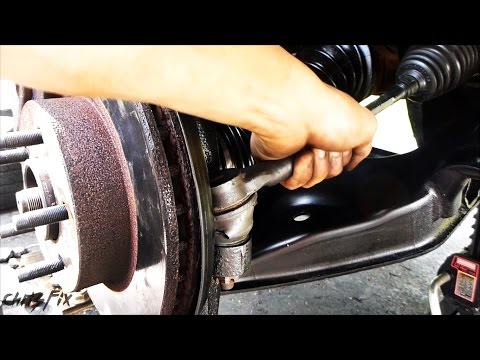
This is where the concept of a supplement comes in. A supplement is an additional claim for damages found after the initial estimate was written. In the case of an F-250, this often includes items like the steering stabilizer, drag link, tie rod ends, or even the steering gear box itself.
Why an alignment check is not a complete repair
One common mistake owners make is assuming that if the truck drives straight and the alignment numbers are green on the computer screen, the truck is fixed. In the world of heavy-duty repair, an alignment is a diagnostic tool, not a cure-all.
If a technician has to adjust a component to its maximum limit just to get the truck within specification, there is a high probability that a part is bent. For example, a bent axle housing or a tweaked radius arm might still allow for a successful alignment, but the structural integrity of the component is compromised. You should ask your repairer if the components were physically measured and inspected for stress marks or deformations, rather than just relying on the alignment machine.

The role of OEM versus aftermarket parts in HD repairs
When repairing a 2018 F-250, the type of parts used matters significantly. Ford provides specific procedures for inspecting steering columns and steering gears after an impact. Insurance companies often try to source aftermarket or recycled suspension parts to save costs.
However, because these trucks are often used for towing and heavy hauling, using components that meet Original Equipment Manufacturer (OEM) specifications is critical for safety and longevity. You should review your insurance policy to see if you have an OEM parts endorsement and discuss with your shop which parts are being used for critical steering and suspension links.
Hidden Technology: ADAS and Recalibration
On a 2018 model, the repair isn't just about steel and iron. Even a heavy-duty truck has sensors. If your F-250 is equipped with Adaptive Cruise Control or Pre-Collision Assist, there are radar sensors and cameras that may require recalibration after the front-end geometry is disturbed.
If these calibrations are skipped, your safety systems may not function correctly, or you may see warning lights on the dashboard weeks after the repair is finished. A proper repair facility must account for these electronic diagnostics as part of the mechanical restoration.
Who pays for the extra repairs?
If the shop identifies hidden damage, they will submit a supplement to the insurance company. The insurance adjuster will then likely visit the shop to verify the findings.
- Collision-Related: If the damage is clearly related to the accident, the insurance company typically pays the shop directly for the additional labor and parts.
- Wear-and-Tear: If the shop finds items like ball joints that were already worn out before the crash, those may be considered customer responsibility. It is important to distinguish between collision-related damage and pre-existing maintenance issues.
What should you do if you are worried about the quality of the repair?
If you feel your truck does not handle the same after the repair, or if you hear popping and clicking sounds when turning the wheel, the inspection was likely incomplete. You have the right to choose your repair facility in most states, and you should choose one that understands the mechanical complexities of a Super Duty, not just a shop that focuses on paint and body work.
Practical steps for the vehicle owner:
- Request Alignment Records: Ask for a copy of the pre-repair and post-repair alignment sheets to see how much adjustment was required.
- Verify Physical Inspections: Ask the shop for a list of all steering and suspension components that were physically inspected for stress.
- Check Ford Guidelines: Inquire whether the steering gear box and steering column were checked according to Ford’s post-collision guidelines.
- Confirm ADAS Calibration: If your truck has advanced safety features, ensure the shop has a documented plan for recalibrating the sensors.
- Review Your Policy: Consult your insurance policy regarding your right to OEM parts and your coverage for mechanical diagnostics.
A front-end collision on a heavy-duty pickup is rarely just a cosmetic issue. By focusing on the mechanical integrity of the steering and suspension, you ensure that your F-250 remains safe for the road and capable of the heavy work it was designed to perform. Repairs are not finished just because the truck looks good; they are finished when the vehicle performs to the manufacturer's original safety and handling specifications.



No Comments Yet
Be the first to comment on this article.