Curtis.Castiglione@ROzebra.com

2018 Ford Escape: Hidden Damage and Insurance Supplements
By Curtis Castiglione
It is a common scenario: You are involved in a minor front-end collision in your 2018 Ford Escape. At first glance, the damage looks limited to a cracked plastic bumper and a broken grille. The initial insurance estimate reflects a relatively straightforward repair. However, once the vehicle is at the body shop and the technician removes the bumper cover, the repair cost suddenly doubles or triples.
This happens because modern vehicles like the Ford Escape are designed with complex, tightly packed cooling and safety systems hidden directly behind cosmetic plastic panels. If you are wondering why your estimate changed or who is responsible for the additional costs, it helps to understand the difference between a visual estimate and a full "blueprint" of the damage.
Why Did My 2018 Ford Escape Repair Estimate Increase After the Bumper Was Removed?
When an insurance adjuster or a shop estimator first looks at your vehicle, they are often performing what is known as a preliminary estimate. They can only write for what they can see without taking the car apart.
On a 2018 Ford Escape, the plastic bumper cover is engineered to be flexible. In a low-speed impact, it can hit an object, compress, crush the delicate components behind it, and then "pop" back into its original shape. To the untrained eye, the car looks fine, but the underlying structure has absorbed the energy of the hit. This is why the estimate "increases"—it isn't necessarily that the price went up, but rather that the full extent of the damage was finally documented.

The Reality of Hidden Damage: The Vulnerable "Cooling Stack"
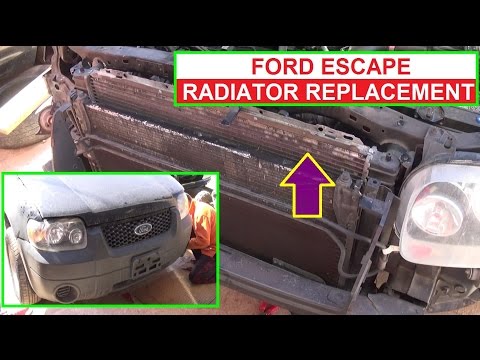
The most critical component behind that bumper is the radiator support. In the 2018 Escape, this support is often a composite or modular assembly. It acts as the skeleton for the entire front end, holding:
- The Radiator (engine cooling)
- The Air Conditioning Condenser
- The Electric Cooling Fans
- Active Grille Shutters (which open and close to improve aerodynamics)
- Ambient Temperature Sensors
Even if your car is not leaking fluid and the engine is not overheating, a slight bend in this support can misalign the entire front end. If the radiator support is pushed back even half an inch, the new bumper, hood, and headlights will not fit correctly during reassembly.
Understanding the "Supplement" Process
The document that accounts for newly discovered damage is called an insurance supplement. This is a standard and expected part of the collision repair process.
After the shop performs a teardown—the process of removing damaged exterior panels—the technician can finally see the "hidden" damage. They may find broken mounting tabs on the headlamps, bent brackets, or hairline cracks in the radiator tanks that only appear when the system is under pressure.
Collision Damage vs. Mechanical Wear
It is important to distinguish between "collision damage" and "mechanical wear and tear."
- Collision Damage: A radiator bent or cracked by the impact of the crash. This is typically covered by your insurance (minus your deductible).
- Mechanical Wear: A radiator that was already leaking due to age or corrosion prior to the accident. Insurance companies generally will not pay to fix pre-existing maintenance issues.
Technical Diagnosis: Sensors and Calibration
A front-end collision on a 2018 Ford Escape involves more than just nuts and bolts. Depending on your trim level, this vehicle may be equipped with various sensors, such as distance sensors for adaptive cruise control or parking assistance.
If these sensors are moved—even slightly—or if the wiring harness is pinched against the frame, the vehicle’s computer system may trigger fault codes (check engine or warning lights).
The Importance of Scanning:
- Pre-Repair Scan: A diagnostic tool is used to see what systems are malfunctioning before work begins.
- Post-Repair Scan and Calibration: Once the car is reassembled, the shop must ensure the sensors are "aimed" correctly. If a sensor is off by a few millimeters, it could miscalculate the distance to the car in front of you. Many modern Fords require specific calibration procedures to ensure these safety features function correctly.

OEM vs. Aftermarket Parts in the Cooling System
One of the biggest points of disagreement in insurance claims involves the type of parts used. Many insurance policies allow for the use of "Like Kind and Quality" (LKQ) or aftermarket parts to save costs.
While an aftermarket bumper might look fine, mechanical components like the radiator or the AC condenser are high-precision items. The 2018 Ford Escape has a very specific "cooling stack" where components sit incredibly close together. If an aftermarket radiator is slightly thicker than the original or has mounting points that are slightly off, it can cause:
- Vibrations that lead to premature part failure.
- Rubbing against the cooling fan shroud.
- Inadequate Cooling because the airflow through the condenser and radiator is disrupted.
You should ask your repair facility if they are using Original Equipment Manufacturer (OEM) parts for the cooling system and the radiator support to ensure proper fitment and engine temperature regulation.
Practical Steps: What Should I Do If My Estimate Increases?
If you are navigating a repair for a front-end collision, do not be alarmed if the initial estimate grows. Instead, take these practical steps:
- Ask for a Teardown Report: Ask the shop to show you photos of the damage found behind the bumper. A reputable shop will document the bent support or cracked cooling fans to justify the supplement to the insurance company.
- Verify Pressure Testing: If the radiator support was impacted, the cooling system should be pressure-tested. This ensures there are no slow leaks that could lead to engine overheating weeks after you get the car back.
- Inquire About ADAS: Ask the shop if your Escape has Advanced Driver Assistance Systems (sensors/radar) in the front end that require calibration. If the shop says they "don't do that," you may want to find a facility that follows the manufacturer’s specific technical procedures.
- Check Your Policy: Review your insurance policy regarding "hidden damage" and "parts usage." While you have the right to choose your repair shop, the insurance company's obligation to pay for OEM parts versus aftermarket parts varies by state and by the specific language of your contract.
The Bottom Line: A front-end accident is rarely as simple as it looks. By understanding that the bumper is merely a cover for a sophisticated network of cooling and safety technology, you can better communicate with your shop and your insurer to ensure your Ford Escape is returned to its safe, pre-accident condition.



No Comments Yet
Be the first to comment on this article.