Curtis.Castiglione@ROzebra.com
2018 Chevrolet Equinox Wheel Impact and Suspension Repair Guide
When a 2018 Chevrolet Equinox sustains a direct impact to a front wheel—whether from a curb, a deep pothole, or a side-swipe collision—the damage is rarely limited to what you can see on the surface. While a scuffed or bent rim is the most obvious sign of trouble, the physics of a collision dictate that energy must go somewhere.
In modern vehicles, that energy travels through the tire and rim and deep into the steering and suspension systems. Understanding why a seemingly minor bump can result in a four-figure repair bill is essential for any vehicle owner navigating the insurance claim process.
The Physics of Force Transfer
Modern vehicles like the Equinox are engineered with specific weak points in the suspension. Components like control arms are often designed to bend under extreme stress. This is a safety and structural preservation feature; by deforming, these parts absorb energy that might otherwise reach the more expensive vehicle frame or unibody.
If your wheel is tilted at an odd angle or sits further back in the wheel well than the other side, a component has physically deformed to protect the rest of the vehicle. The primary parts at risk include:
- Lower Control Arm: The horizontal link that manages the wheel's position.
- Steering Knuckle: The heavy iron or aluminum piece the wheel attaches to.
- Strut Assembly: The component that manages vertical movement and dampening.
- Tie Rods: The linkages that connect the steering rack to the wheels.
- Wheel Hub and Bearing: While they may not look broken, an impact can brinell the bearing (creating microscopic indentations in the metal races), leading to a loud humming or growling noise weeks or months after the accident.
Why Initial Insurance Estimates Are Often Low
It is common for an initial insurance estimate to cover only the visible damage, such as a new wheel and tire. This often leaves owners asking: "Why did my repair cost more than the original estimate?"
Insurance adjusters typically write preliminary estimates based on a visual inspection of the exterior. They generally do not authorize the replacement of internal mechanical parts until there is objective proof of damage. This leads to a process called a supplement.
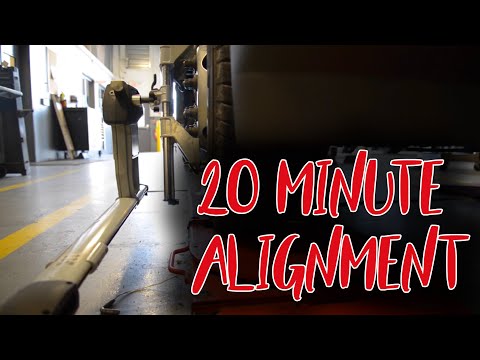
Once the vehicle is at a repair facility and the wheel is removed, the technician will perform a teardown and a diagnostic alignment check. If the alignment machine shows that the camber, caster, or toe measurements are outside of Chevrolet’s specifications, it provides the evidence needed to prove to the insurance company that internal parts are bent.

The Importance of a Diagnostic Alignment
A common mistake owners make is assuming that if the car drives straight, the suspension is fine. This is a dangerous misconception. A vehicle can be made to drive straight even if a component is slightly bent, but this leads to:
- Accelerated Tire Wear: You may find yourself replacing tires every 5,000 miles because the geometry is dragging the rubber across the road.
- Compromised Safety: A bent suspension component changes how the vehicle handles during emergency maneuvers or heavy braking, potentially leading to unpredictable behavior.
The alignment check is not just a final step to straighten the steering wheel; it is a vital diagnostic tool. If a technician attempts to align the vehicle and finds that the numbers will not return to the manufacturer’s specified range, they should not keep adjusting the vehicle. Instead, they must stop and identify which part is physically deformed.

Electronic Steering and Safety Sensors
The 2018 Chevrolet Equinox utilizes Electric Power Steering (EPS). A hard hit to the wheel can send a shockwave through the steering rack itself, potentially damaging internal gears or electronic sensors. Because these systems are integrated into the vehicle's computer network, damage to the rack can be much more expensive than older hydraulic systems.

Furthermore, modern Equinox models are often equipped with Advanced Driver Assistance Systems (ADAS), such as Lane Keep Assist. These systems rely on a Steering Angle Sensor to know exactly where the wheels are pointed. If the mechanical suspension is not perfectly aligned, or if the sensor is not recalibrated after a repair, these safety systems may malfunction or deactivate. This calibration is a specific labor operation that requires a diagnostic scan tool and is a necessary part of a complete repair.
OEM vs. Aftermarket Parts in Mechanical Repairs
When repairing suspension and steering, the choice of parts is significant. Insurance policies often allow for the use of Like Kind and Quality (LKQ) or aftermarket parts to control costs.
However, for critical steering components, many manufacturers recommend New Original Equipment Manufacturer (OEM) parts to ensure the geometry and metallurgy match the original design exactly. You should:
- Review your insurance policy for an OEM Parts Endorsement.
- Ask the repair shop what type of parts are being used for your suspension.
- Consult the manufacturer’s repair position statements if there is a disagreement between the shop and the insurer.
Critical Questions for Your Repair Facility
If you have experienced a wheel impact, do not authorize a quick fix that only replaces the rim. To ensure your Equinox is safe and to avoid future out-of-pocket expenses, ask the repair facility these four questions:
- Did you perform a pre-repair alignment check to identify bent components? This documentation is vital for getting insurance to pay for hidden damage.
- Are there any signs of brinelling or damage to the wheel bearing and hub? Bearing failure can be delayed, so a thorough check now is better than a noisy hub later.
- Will the steering angle sensor and ADAS systems need to be recalibrated? Ensure the safety tech is functioning correctly before you pick up the car.
- Can I have a copy of the before-and-after alignment measurements for my records? This is your proof that the vehicle's geometry is back to factory specifications.
By focusing on documented measurements rather than visual guesswork, you ensure that your vehicle remains safe and that you won't be stuck paying for hidden damage long after the insurance claim is closed. Remember, while the insurance company pays for the loss, you are the one who authorizes the final repair. Ensure the hidden mechanical side of the accident is addressed as thoroughly as the visible body damage.



No Comments Yet
Be the first to comment on this article.