Curtis.Castiglione@ROzebra.com

2017 Ford Expedition Front-End Collision: Cooling System and Insurance Claims
When a 2017 Ford Expedition is involved in a front-end collision, the owner’s first instinct is often to check if the engine starts. If the vehicle fires up and moves, there is a common misconception that the damage is just cosmetic. However, in the world of modern collision repair, the line between body work and mechanical repair is almost non-existent.
The short answer is that most insurance policies do cover mechanical damage to the cooling system, including the radiator, A/C condenser, and support structures, provided the damage was a direct result of the collision. However, getting that damage paid for and repaired correctly requires understanding how these components interact and how the insurance estimating process actually works.
The Spring Back Illusion: Why Estimates Change
One of the most frustrating experiences for a vehicle owner is receiving an initial insurance estimate for 1,500 dollars, only to have the body shop call two days later saying the bill is now 4,500 dollars. This happens because of the "spring back" effect.
On a vehicle like the Ford Expedition, the front bumper cover and grille are made of flexible plastics. In a low-to-mid-speed impact, these parts can compress, crush the components behind them, and then spring back into their original shape. While the exterior might only show minor scuffs, the force of the impact has already been transferred into the cooling package.
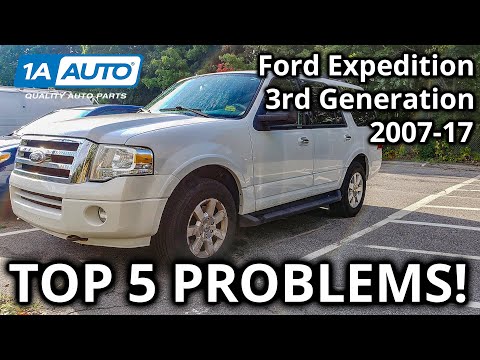
The Vulnerable Cooling Package
The components are usually arranged in this order, from front to back:
- Active Grille Shutters: Motorized slats that improve aerodynamics.
- A/C Condenser: A thin aluminum component that cools refrigerant.
- Radiator: The primary cooling component for the engine.
- Fan Assembly: Pulls air through the system.
Because the condenser is at the very front, it is almost always the first mechanical victim. It is constructed of paper-thin aluminum fins that can be crushed or cracked by the slightest flex of the bumper.
The Role of the Radiator Support
The radiator support on a 2017 Ford Expedition is the backbone of the front end. It is a large, complex frame that holds the cooling package in place and serves as a mounting point for the headlights, hood latch, and various sensors.
If the radiator support is even slightly tweaked, it can cause several issues:
- Headlight Misalignment: Your lights may point too high or too low, creating a safety hazard at night.
- Hood Latch Issues: The hood may not stay securely closed at high speeds if the latch mounting point has shifted.
- Structural Fatigue: A cracked plastic or bent metal support can lead to premature failure of the radiator or condenser due to excessive vibration.
Insurance adjusters often write preliminary estimates based only on what is visible. It is only during the teardown—when the shop removes the bumper and grille—that the true extent of the damage to the support and cooling system is discovered. The shop then submits a supplement to the insurance company to cover these additional costs.
Modern Tech: Active Grille Shutters and Scans
The 2017 Expedition features Active Grille Shutters (AGS). These are controlled by the vehicle’s computer to manage airflow for engine warming and fuel efficiency. In a collision, these plastic shutters often shatter. Because they are electronic, damage to the AGS can trigger a Check Engine Light or a Diagnostic Trouble Code (DTC).
This is why a diagnostic scan is a mandatory part of a modern collision repair. Even if the engine runs, the computer may be recording hidden faults related to the cooling system or front-end sensors that must be addressed to return the vehicle to its pre-accident condition.
The Danger of the Running Engine Myth
A common mistake is assuming that a running engine means the vehicle is safe to drive. This can lead to two major problems:
- The Slow Leak: A punctured A/C condenser will leak refrigerant slowly. You may not notice your air conditioning is failing until several days after the accident.
- The Pressurized Crack: A radiator tank may have a hairline crack that does not leak while the car is idling in your driveway, but will spray coolant once the engine reaches operating temperature and the system becomes pressurized.
Important Note on Customer Responsibility: Most insurance policies require the owner to take reasonable steps to prevent further damage. If you continue to drive a vehicle with a compromised cooling system and the engine overheats and melts, the insurance company may deny coverage for the engine replacement. They may argue that the mechanical breakdown was caused by your actions rather than the collision itself.

Parts Selection: What Will Be Put in My Car?
When the estimate is finalized, you will see different categories of parts. Your specific insurance policy and state laws dictate which ones are used:
- OEM (Original Equipment Manufacturer): Parts made by Ford. They are the gold standard for fit and function.
- Aftermarket (A/M): New parts made by third-party companies. Insurance companies often default to these for radiators and condensers to save money.
- Recycled (Used): Parts harvested from a donor vehicle. While often OEM, their history is unknown.
If you use your Expedition for heavy towing, you should advocate for OEM cooling components. Some aftermarket radiators have fewer cooling rows than the original Ford part, which could lead to higher engine temperatures under heavy loads.
Practical Steps for Vehicle Owners
If you are researching a front-end claim for your Expedition, follow these steps before authorizing final repairs:
- Request a Teardown: Do not rely on the parking lot estimate from the insurance adjuster. Ask the shop to remove the bumper and inspect the radiator support.
- Ask for a Pressure Test: Specifically ask the shop to perform a cooling system pressure test and an A/C leak test to ensure no hairline fractures exist.
- Confirm the Scan: Ensure the shop performs a pre-repair and post-repair diagnostic scan to check for codes related to the Active Grille Shutters or other sensors.
- Review the Parts List: Look at your estimate. If it lists Quality Replacement Parts or Alternative Parts, these are aftermarket. Check if your policy allows you to request OEM parts, though you may have to pay the price difference.
The relationship between collision damage and mechanical failure is inseparable in modern SUVs like the Ford Expedition. A simple bumper claim can easily involve complex cooling systems and electronic shutters. Professional inspection, functional testing, and a thorough teardown are the only ways to ensure your vehicle is truly restored to its pre-accident safety and reliability.



No Comments Yet
Be the first to comment on this article.