Curtis.Castiglione@ROzebra.com

1996-2001 Ford Explorer 5.0L V8 Donor Guide
In the world of automotive restoration and hot-rodding, there is a common, costly mistake: hunting for an engine instead of hunting for a complete system.
Most builders heading to a salvage yard for a Ford small-block project gravitate immediately toward the Mustang rows. They find picked-over carcasses, missing cylinder heads, and premium price tags. Meanwhile, just a few rows over, sits a fleet of neglected, soccer-mom SUVs from the late 1990s.
To the untrained eye, the 1996 to 2001 Ford Explorer and Mercury Mountaineer are just outdated family haulers. To the savvy builder, they are the single best source for a high-output 302 Windsor ecosystem ever produced.
The Ecosystem Philosophy: Why Complete Donors Win
The engine is merely the center of a complex web. When you buy a bare engine, you quickly realize you are missing the computer, the harness, the throttle, the sensors, the ignition components, and the fuel system. Suddenly, your cheap engine swap requires 2,000 dollars in peripheral parts.
By purchasing a complete Explorer donor, you are not just getting a block; you are getting a modern, fuel-injected, high-airflow powertrain designed for durability and torque. The smartest donor hunter buys the engine's ecosystem, not just the engine. Once the donor has been dismantled and the electronics have been thrown in the scrap pile, you have lost your options.
The Core Value: GT40 and GT40P Cylinder Heads
When Ford needed to make the heavy, all-wheel-drive Explorer competitive in the mid-90s, they realized the standard truck-spec 302 lacked the airflow to move that much mass. Instead of a ground-up redesign, they reached into the performance bin.
- 1996 to Early 1997 (The GT40): These models came equipped with cast-iron GT40 heads, nearly identical to those found on the 1993 Mustang Cobra and the F-150 Lightning.
- Identification: Look for three vertical bars cast into the end of the cylinder head.
- Benefit: These heads use standard header mounting and spark plug angles, making them a bolt-on performance upgrade for any vintage Ford.
- Mid-1997 to 2001 (The GT40P): Ford revised the design to the GT40P. While often dismissed due to a revised spark plug angle, the P heads feature a more efficient combustion chamber and smaller valves that actually flow better than the original GT40s in street-strip applications.
- Identification: Look for four vertical bars cast into the end of the head.
- Note: You must use Explorer-specific manifolds or specialized P headers to avoid melting spark plug wires.
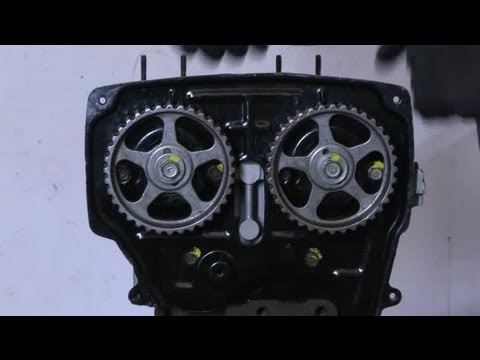
The Short Accessory Drive: A Swapper's Dream
One of the most expensive parts of a V8 swap into a small engine bay—like a Ford Ranger, a Jeep CJ, or a 1960s Falcon—is the front accessory drive.
The Explorer 5.0 uses a unique, short serpentine belt setup. The water pump and timing cover are significantly shallower than those found on a Mustang or F-150. This saves several inches of precious horizontal space, often making the difference between needing an electric fan or being able to run a mechanical one. Sourcing these brackets, the pump, and the timing cover separately can easily cost 600 dollars; on a donor vehicle, they are essentially free.
The Brain: EEC-V and OBD-II Electronics
Modern engines depend on their electronics. The Explorer 5.0 utilizes the EEC-V computer system, which offers a massive leap in sophistication over the older Mustang systems.
- Precision Control: These vehicles use a Crankshaft Position Sensor (CKP) and a Camshaft Position Sensor (CMP), allowing for much more precise ignition timing and fuel delivery.
- Modern Diagnostics: Being an OBD-II system, it can be tuned with modern handheld devices and provides real-time data for troubleshooting.
- Reliability: By taking the entire harness and every sensor, you eliminate the Frankenstein wiring issues that plague most swaps.
The Intake Manifold: High-Flow Torque
The intake manifold on the 5.0 Explorer is widely considered the best-flowing factory EFI intake Ford ever produced for the small-block Windsor.
It is a long-runner design that produces massive low-end torque, which is exactly what a heavy street car or an off-road rig needs. Structurally, it is a heavy-duty cast version of the Ford Performance GT40 tubular intake that enthusiasts used to pay a premium for in the aftermarket. Because these were used in heavy SUVs, they were built to never strain under the weight of a 4,500-pound truck.
The Transmission: The 4R70W Evolution
If your donor is an automatic, you are likely looking at the 4R70W. This is a significantly stronger evolution of the old AOD transmission.
- Durability: Because it was designed for an SUV, it features stronger internal components than the passenger-car versions.
- Gearing: It features a wide-ratio gear set, providing a lower first gear for better off-the-line acceleration and a solid overdrive for highway cruising.
Practical Considerations for the Hunter
When evaluating a 5.0 Explorer or Mountaineer donor, keep these tips in mind:
- The Oil Pan: These vehicles use a rear-sump oil pan design. This is a must-have for many 1960s and 70s chassis swaps, fitting over the crossmember without modification.
- Condition vs. Cost: The smartest way to buy is to find a runner with a blown transmission or rusted body panels. You can typically find these for 800 to 1,200 dollars.
- The Sum of Parts: If you were to buy the heads, intake, accessory drive, high-torque starter, and wiring harness individually on the secondary market, you would spend double the cost of the entire vehicle.
- Cooling: The Explorer uses a high-flow water pump and a robust fan clutch assembly that are worth salvaging for the swap.
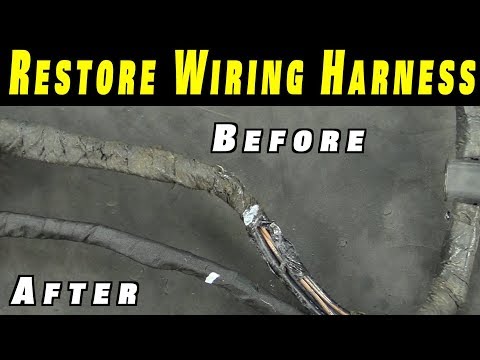
The smartest donor hunter buys the ecosystem, not just the engine. The 5.0 Explorer proves a primary rule of donor hunting: Don’t look for the car everyone wants to drive; look for the vehicle that was forced to use the parts you need. The most valuable computer and harness in the yard might be hiding in the most boring SUV on the lot. Preserve the system, and you will have a running project while everyone else is still searching for a throttle cable.



No Comments Yet
Be the first to comment on this article.